
What Is an ATS? (And Why It Rejects Qualified Candidates)
An Applicant Tracking System (ATS) is software used by employers to collect, sort, scan, and rank job applications.
Think of it as a digital gatekeeper. Before a human recruiter ever sees your resume, the ATS parses your document, compares it against the job description keywords, and assigns a ranking score. If you don't meet the algorithmic criteria, you are filtered out automatically.
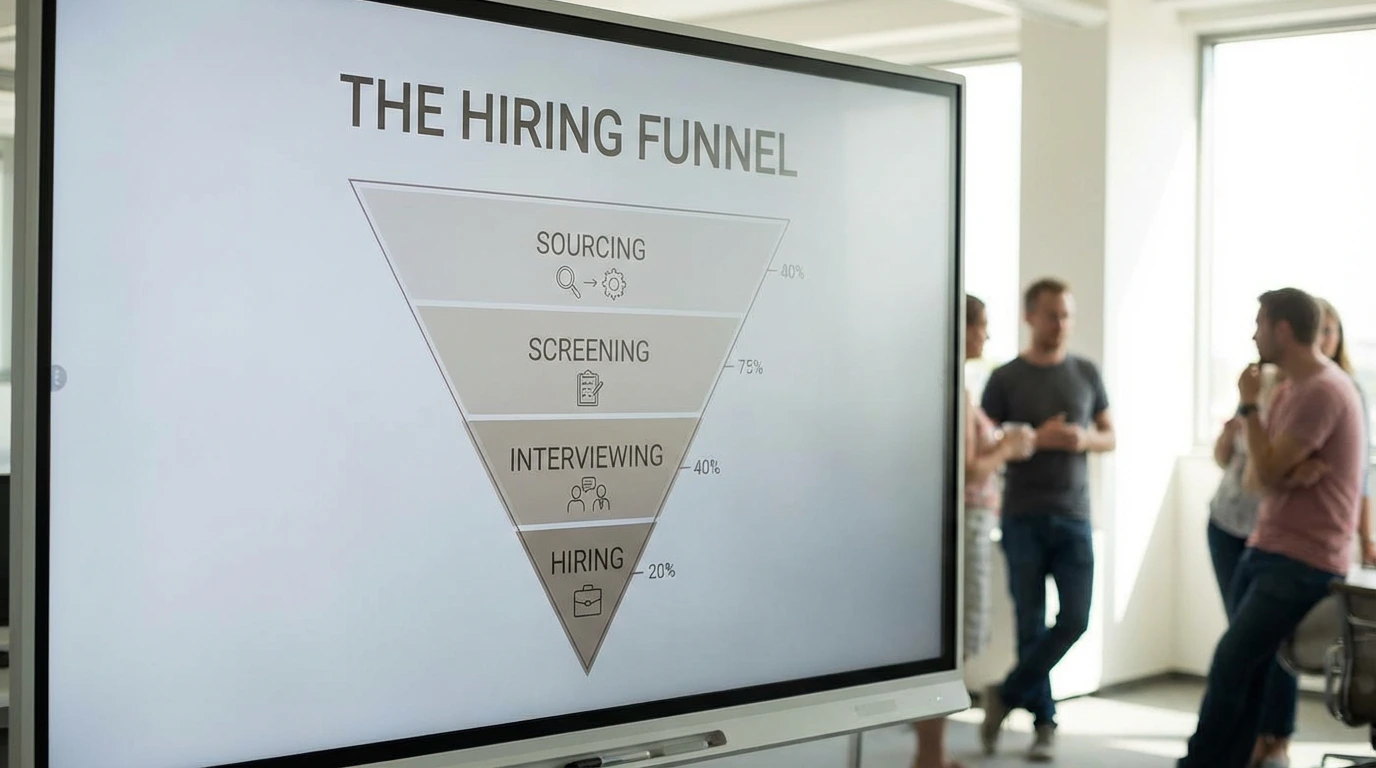
The Reality
75% of resumes are rejected by the ATS before a human ever sees them.
How the "Robot Recruiter" Thinks
The ATS isn't reading your resume like a person would. It's parsing data. Here is the mechanical process that determines your fate.
Parsing
The system strips away your formatting to extract raw text. Complex layouts, columns, and graphics often break this process, resulting in garbled data.
Keyword Matching
It scans for specific keywords from the job description. If you say 'managed teams' but the bot wants 'leadership experience', you might lose points.
Ranking & Routing
Candidates are scored and ranked. Recruiters typically only look at the top 10-20% of matches. The rest enter the 'ATS Black Hole'.
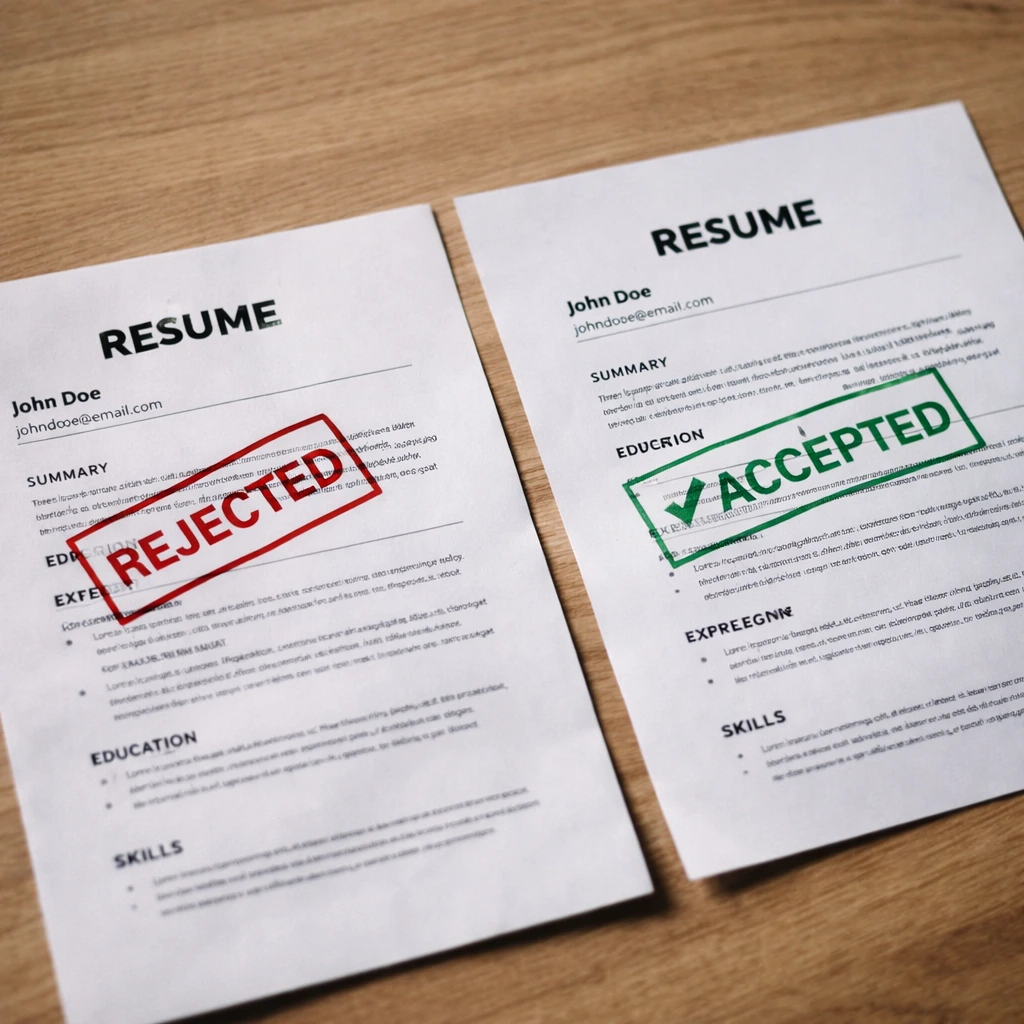
Why Good Candidates Get Rejected
You can be perfectly qualified for the role and still get rejected instantly. Here are the most common technical reasons why.
✕ Formatting Errors
Using columns, tables, headers/footers, or graphics often confuses the parser. The ATS might read your resume as blank or jumbled text.
✕ Keyword Mismatch
If the job description asks for "CRM experience" and you write "Customer Relationship Management" without the acronym, some older systems won't make the connection.
✕ Non-Standard Headings
Using creative headings like "My Journey" instead of "Experience" can cause the parser to miscategorize your entire work history.
Don't Fight the Bot. Bypass It.
Optimizing for the ATS is a defensive strategy. It helps you not lose, but it doesn't help you win.
The most effective way to land an interview is to ensure a human decision-maker sees your application. Ballista helps you identify the hiring manager and send a physical or digital packet directly to them—skipping the filter entirely.
Frequently Asked Questions
Common questions about Applicant Tracking Systems.
What does ATS stand for in recruiting?
ATS stands for Applicant Tracking System. It is a software application that enables the electronic handling of recruitment and hiring needs, acting as a central database for candidate information.
How do I know if my resume will pass the ATS?
To pass an ATS, use a clean, simple format (no columns or graphics), use standard headings (Experience, Education), and include keywords found in the job description. Save your file as a .docx or PDF (though .docx is often safer for older systems).
Is it ethical to bypass the ATS?
Yes. Networking and contacting hiring managers directly is a standard professional practice. You should still submit an application through the ATS for compliance reasons, but reaching out directly ensures your application is actually seen.
What are the most common ATS platforms?
Common systems include Workday, Taleo, Greenhouse, Lever, and iCIMS. Each has slightly different parsing algorithms, but the general rules of simple formatting and keyword relevance apply to all of them.